Gears of War: E-Day does not have a confirmed traditional 50-wave Horde mode as of October 10, 2026. Its current cooperative survival mode is Horde Siege, a 12-player PvE format built around three four-player squads, larger Kalona battlefields, classes, missions, changing conditions, and shared encounters.
The closest available option is the Horde playlist inside Horde Siege. It asks your squad to defend one position against 10 waves of increasingly difficult Locust and can last approximately 50 to 60 minutes. The similar numbers can cause confusion, but the listed duration is measured in minutes; it does not turn the mission into a 50-wave match.
This is a statement about the current confirmed offering, not a claim that a 50-wave mode can never appear. Post-launch additions are planned, but the announced content does not currently confirm a traditional 50-wave playlist.
The short answer
| Player question | Current answer |
|---|---|
| Is classic 50-wave Horde confirmed in E-Day? | No traditional 50-wave mode is confirmed in the current launch information. |
| Is there a wave-defense activity? | Yes. Horde Siege includes a Horde playlist built around defending one R.I.G. for 10 waves. |
| Is that playlist the same as classic 50-wave Horde? | No. It uses the new Horde Siege structure and ends after 10 waves. |
| How long can the 10-wave activity take? | Up to approximately 50 to 60 minutes. |
| Can 12 players participate in Horde Siege? | Yes. The mode places three four-player squads on the same larger battlefield. |
| Could a longer classic mode arrive later? | It is possible, but no current announcement confirms one. |
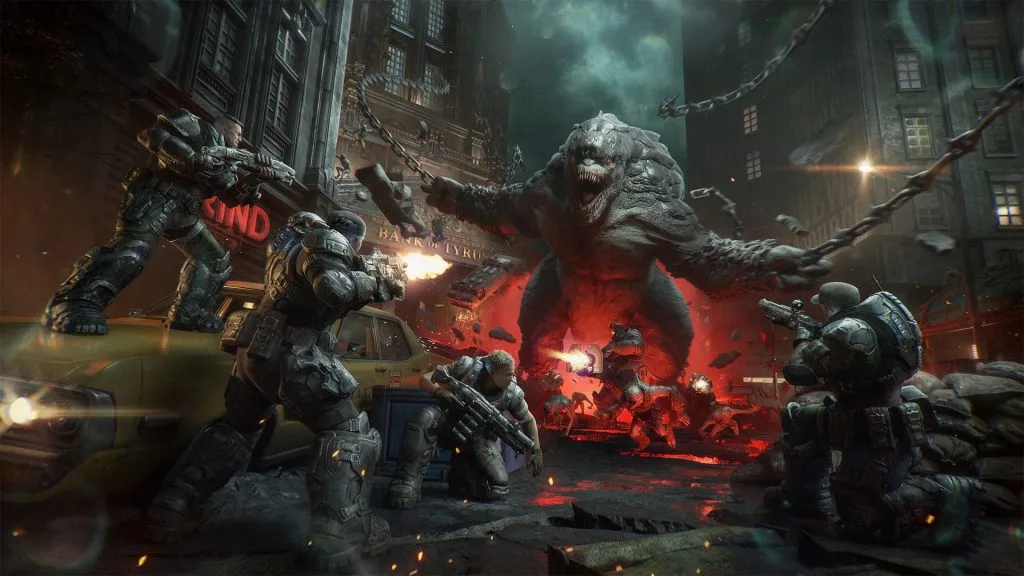
Horde Siege uses large-scale battlefield encounters instead of a traditional 50-wave arena.
The practical choice is therefore straightforward. If your goal is stationary wave defense, select Horde Siege’s Horde playlist. If your requirement is specifically a continuous 50-wave run, E-Day does not currently provide a confirmed match matching that rule set.
Reading the Horde names correctly
E-Day uses “Horde” at more than one level, so it helps to separate the mode from the playlist.
Horde Siege is the complete PvE mode. It supports 12 players divided into three squads of four. Squads enter a larger, continuing battle in Kalona, receive missions, cross paths with other squads, and face conditions that can change between runs.
Inside Horde Siege, you select from three principal mission playlists:
- Blitz contains one or two objectives and normally takes about 15 to 20 minutes.
- Siege contains multiple objectives, encourages more movement across the map, and normally takes about 20 to 40 minutes.
- Horde asks your squad to hold a position, establish defenses, and survive 10 waves with limited support. It can last about 50 to 60 minutes.
The playlist named Horde is therefore a component of Horde Siege, not a separate restoration of a classic 50-wave mode. Its 10-wave rule is the clearest way to identify what you are actually selecting.
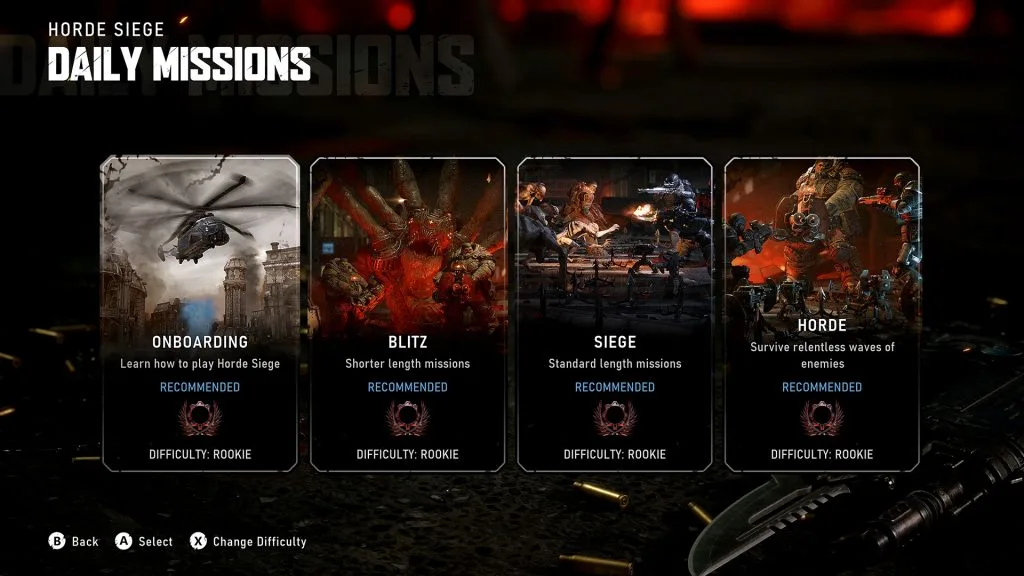
The mission screen separates the Horde playlist from the broader Horde Siege mode.
A second source of confusion is the phrase “wave-based survival.” Horde Siege is officially described as an evolution of that familiar foundation, but “evolution” describes a redesigned mode. It does not promise that every older rule, match length, or feature returns unchanged.
What E-Day offers instead
Horde Siege keeps the basic pressure of surviving Locust attacks with teammates, but places that pressure inside a broader mission system. Each squad has its own assignment while sharing a battlefield with two other squads. Depending on the selected playlist, you may defend a position or move through a sequence of objectives.
Most missions revolve around R.I.G.s, or Resonation Imaging Geographers. These devices were originally used to find underground Imulsion pockets and are repurposed in E-Day to map Locust tunnels below Kalona. The launch objective types include Secure, Calibrate, Repair, Defend, and Horde.
The Horde objective is the one relevant to players seeking classic-style defense. Locust forces attack a single R.I.G. over 10 waves, with difficulty increasing as the mission continues. Blitz and Siege can still contain substantial combat, but their defining structure is objective completion rather than a fixed sequence of 50 survival waves.
Horde Siege also adds variables beyond a simple wave counter. Mission modifiers can alter combat rules, Poisons strengthen the Locust after boss waves, and Invasion Events introduce major threats such as a Corpser or Brumak. These systems make repeat missions less predictable, but they also reinforce why Horde Siege should be treated as its own format.
How Horde Siege differs from the requested 50-wave format
| Feature | Traditional 50-wave request | Current E-Day offering |
|---|---|---|
| Confirmed availability | The requested standalone format is not confirmed. | Horde Siege is the current PvE survival mode. |
| Survival length | 50 waves would be required to satisfy the request. | The Horde playlist uses 10 waves. |
| Overall scale | The request usually implies one continuous defensive run. | Horde Siege places three squads on a large, active battlefield. |
| Squad structure | A classic-sized single-squad experience is commonly expected. | Three squads of four share the battlefield, for up to 12 players. |
| Match flow | Wave count would be the central progression measure. | Playlist, objectives, difficulty, modifiers, events, and squad activity shape the mission. |
| Defensive option | A 50-wave hold would remain active for the full requested run. | The Horde playlist concentrates defense into a 10-wave R.I.G. mission. |
| Character setup | The keyword alone does not establish a required class system. | E-Day asks players to choose Assault, Breacher, Marksman, or Medic before a mission. |
| Environment | No current E-Day 50-wave map set is confirmed. | Horde Siege uses larger maps spanning districts of Kalona. |
| Session estimate | No supported E-Day duration exists for an unconfirmed 50-wave mode. | The 10-wave Horde playlist can take about 50 to 60 minutes. |
| Future status | It cannot be treated as announced content. | New classes, maps, missions, modifiers, and seasonal content are planned for Horde Siege. |
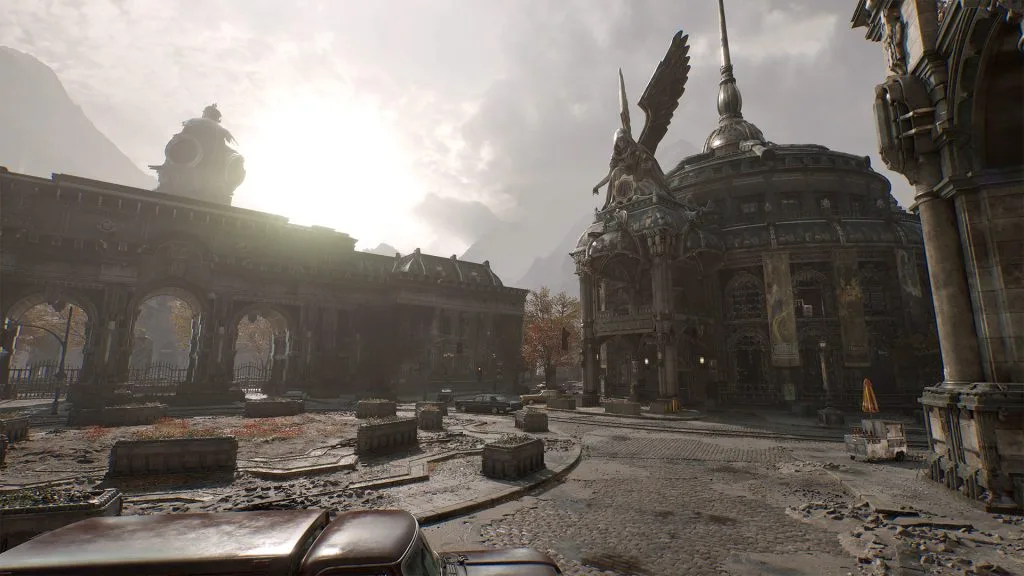
The historic Kalona district illustrates Horde Siege’s expanded city-block battlefield design.
The most important distinction is not simply “10 instead of 50.” Horde Siege changes the surrounding match structure too. Other squads can affect the ongoing battlefield, major enemies can create shared events, and your selected class has its own loadout, combat bonus, progression, and Tactical Gear. Choosing the 10-wave playlist narrows the experience toward fixed-position defense, but it does not remove the wider Horde Siege framework.
Choosing the closest available experience
Use this path when you want the E-Day activity that most closely resembles a sustained Horde defense:
- Enter Horde Siege. Do not use the presence of “Horde” elsewhere in a challenge or event name as evidence of a 50-wave mode.
- Choose a class for the run. Assault, Breacher, Marksman, and Medic have different starting loadouts, bonuses, progression, and Tactical Gear.
- Select the Horde playlist. Blitz is the short objective option, while Siege is the longer mobile mission option. The playlist explicitly named Horde is the fixed-position, 10-wave choice.
- Choose an appropriate difficulty. Horde Siege suggests difficulty according to class level, but your squad makes the final selection.
- Prepare to protect one R.I.G. for all 10 waves. The Locust become more difficult as the defense continues, so the first waves do not represent the pressure of the full mission.
- Reserve enough time. A Horde mission can take approximately 50 to 60 minutes even though it has only 10 waves.
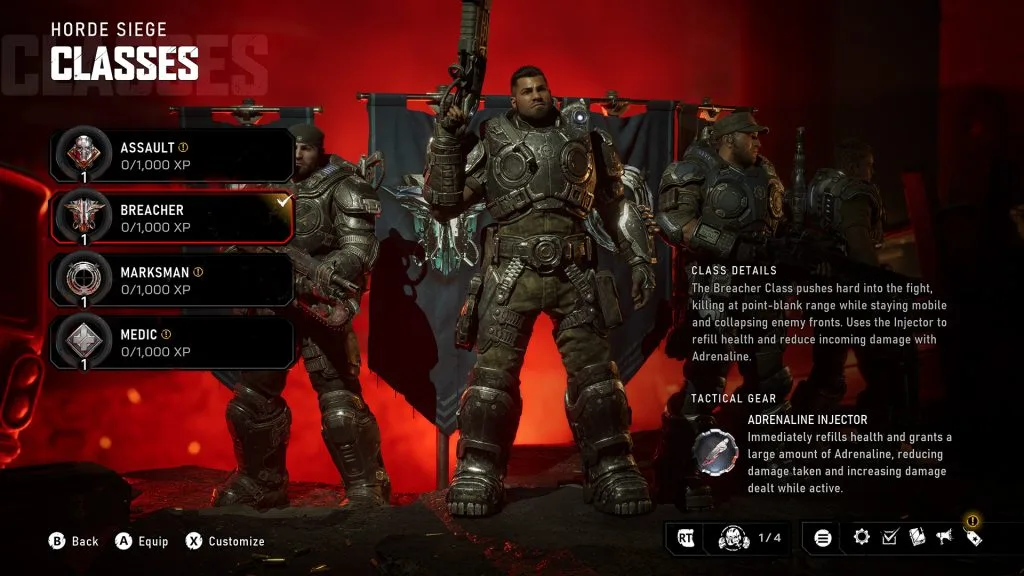
Players choose a Siege class such as Breacher before entering the Horde playlist.
This route gives you the supported combination of a defensive position, fortification decisions, escalating waves, and squad cooperation. It does not provide the endurance milestone of reaching wave 50, so players pursuing that exact format should set expectations before committing to the session.
Assign jobs for a 10-wave defense
The available defense uses E-Day’s classes rather than a separate classic-mode preset. Assault, Breacher, Marksman and Medic contribute different tools, but the game permits repeated classes; a particular four-class composition is not an entry requirement.
Before the run, agree who will hold the R.I.G., watch longer approaches, respond when enemies get close, and support downed teammates. This is a division of tasks for a fixed-position defense, not a claim that one build is mandatory or fastest. Choose roles the players understand, then use the class’s available equipment to support the shared objective. Class progression and stronger equipment do not increase the playlist’s wave count.
Difficulty and session length
Horde Siege difficulty is tied to class progression. The game recommends a difficulty based on class level while leaving the final decision to the squad. The documented upper difficulty recommendations are:
- Infantry: recommended for class levels 10 to 20 and intended as a challenge for experienced players.
- Commander: recommended for class levels 20 to 30 and aimed at players with successful missions behind them.
- Allfather: recommended for max-level classes and described as offering only a slim chance of survival.
Harder settings increase the challenge and rewards, but difficulty and wave count are separate settings. Selecting Allfather does not extend the Horde playlist beyond its stated 10 waves. Likewise, a 50-to-60-minute run describes the estimated time needed for those waves; it is not evidence of 50 individual rounds.
If your available play time is the deciding factor, use the playlist estimates rather than the word Horde alone. Blitz suits a roughly 15-to-20-minute window, Siege fits an estimated 20-to-40-minute session, and Horde is the longest listed option at roughly 50 to 60 minutes.
Claims that do not confirm classic 50-wave Horde
Several accurate statements about E-Day can be misread as confirmation of the requested mode. None of the following establishes a 50-wave playlist:
- “Horde is back.” E-Day brings wave survival into Horde Siege, but its documented Horde playlist has 10 waves.
- “The mode lasts 50 to 60.” That figure refers to minutes, not waves.
- “Horde Siege evolves the iconic mode.” An evolution can preserve the central idea of surviving the Locust while changing player count, maps, objectives, classes, and match flow.
- “Classic Gears elements are returning.” Broad language about franchise identity does not define a specific wave count.
- “More post-launch content is coming.” Planned classes, maps, missions, modifiers, events, and seasonal additions do not constitute an announcement of traditional 50-wave Horde.
- “There is a playlist called Horde.” The name is real, but the documented rules specify a 10-wave defense within Horde Siege.
A reliable confirmation would need to state the actual rule: a mode or playlist with 50 waves. Until an official update supplies that detail, the current answer remains that the traditional format is unconfirmed.
Post-launch expectations
The announced support plan leaves room for Horde Siege to grow. E-Day is scheduled to receive at least five themed multiplayer seasons, and Horde Siege updates can introduce classes, maps, missions, modifiers, seasonal content, and limited-time events. Season 1 itself includes themed Horde Siege event missions.
That roadmap should not be converted into a promise of classic Horde. A new event mission may use waves without containing 50 of them, and a new map does not change the rules of an existing playlist. When evaluating a future announcement, check three details separately:
- Whether it names a new mode or only a Horde Siege event mission.
- Whether it gives an explicit wave count.
- Whether it describes a permanent playlist or limited seasonal content.
Unless all relevant rules are stated, treat the update as additional Horde Siege content rather than the return of traditional 50-wave Horde.
Current choice for wave-defense players
Choose the Horde playlist if you want the closest supported E-Day alternative: a long defensive mission against 10 increasingly difficult waves, centered on one R.I.G. and played within the 12-player Horde Siege battlefield. Choose Blitz or Siege only when shorter sessions or moving objectives matter more than sustained defense.
Do not select the Horde playlist expecting a hidden second set of waves or a progression trigger that extends the mission to 50. The documented activity ends at 10 waves. Players who require the exact classic 50-wave structure should wait for an explicit future announcement instead of treating planned seasonal support as confirmation.