
Mags Carter is a former COG Gear who joins Marcus Fenix, Dom Santiago, and Lucas Reyes in Bravo Squad during the opening Locust invasion. Her background is in demolition work, and her experience makes her a different kind of newcomer from the younger Reyes. She has a history before meeting Marcus and Dom, but this guide keeps the focus on her identity, early character details, and playable customization rather than revealing the campaign's ending.
The most useful distinctions are between Mags as a story character, Mags as a multiplayer character selection, and a particular Mags skin. Those are separate things. Selecting her appearance in Horde Siege does not assign a unique class, and a beta reward skin is not the same as unlocking every version of the character. Her later fate and a verified voice-actor credit are not established here.
Identify Mags within Bravo Squad
Bravo Squad includes Marcus, Dom, Mags, and Lucas. Marcus and Dom are the familiar leads returning from the Pendulum Wars, while Mags and Lucas expand the squad around them. Mags is a veteran with prior military experience; Lucas is the younger recruit. Keeping those roles straight helps explain why their reactions to the sudden disaster can differ even when all four are confronting the same threat.
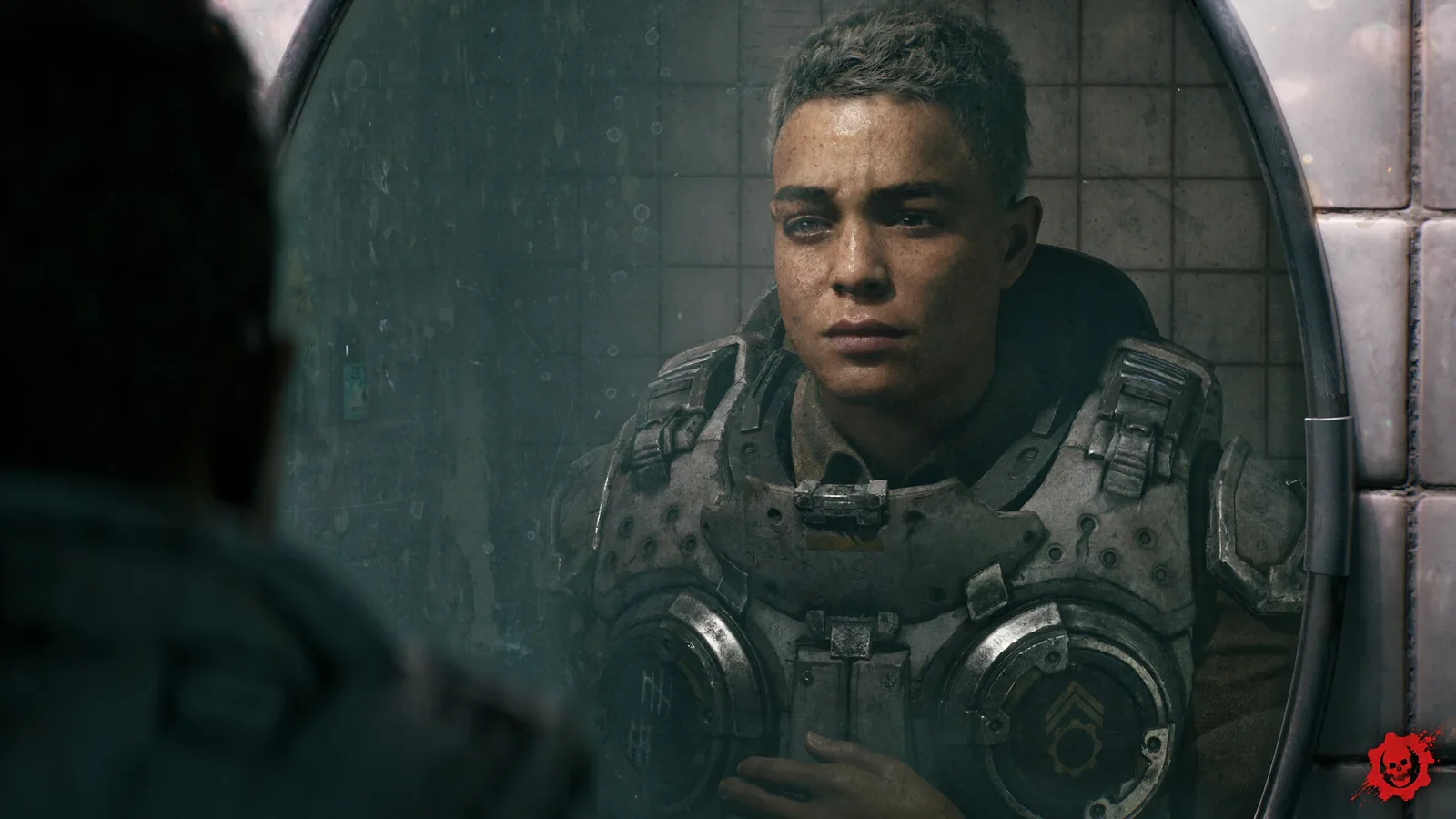
Mags Carter’s face and armor help distinguish her from the other members of Bravo Squad.
Mags is often addressed by her surname, Carter, in squad dialogue. That is the same character as Mags Carter, not an additional squadmate. If you encounter the surname in a cutscene, mission conversation, or character menu, use the scene and the rest of the squad to establish who is being addressed rather than expecting every exchange to use a full name.
Her former service matters because the invasion does not place her in combat as a complete beginner. She brings practical experience into a crisis the squad still has to understand. That combination fits the campaign's first-contact setting: being a veteran can help someone react under pressure without giving them advance knowledge of every new enemy.
Do not confuse her place in Bravo Squad with the squad lineups in later Gears games. E-Day is set fourteen years before the original game. A character's absence from a later familiar lineup does not by itself explain what happens to them during this campaign. It is a timeline distinction, not an ending spoiler or proof of a particular fate.
Her demolition background explains an early contribution
Mags has demolition experience from her time as a Gear. In an early campaign exchange, she identifies that an explosive blast can collapse an unstable emergence hole. That connects her background to an immediate problem the squad faces rather than leaving her experience as an abstract biographical label.
The scene is useful for understanding her role: a person familiar with explosives recognizes an opportunity and proposes an action. It should not be stretched into a claim that she invented every later COG technique or personally explains the entire history of fighting the Locust. The campaign shows a contribution in a particular situation.
That distinction also matters for gameplay. A story scene about demolition expertise does not establish that selecting Mags gives every weapon extra explosive damage. Character biography and gameplay bonuses are different systems. If you want an explosive-focused playstyle in a multiplayer mode, inspect the actual class, weapon, and modification descriptions instead of assuming her personal history supplies an invisible bonus.
Watch how the squad responds when the situation changes. An early solution shows what one character notices, while the group still has to survive together. Mags's competence does not remove Marcus's or Dom's role in the campaign; it gives the four-person squad more than one kind of experience to draw on.
The injury and discharge belong to her earlier history
Mags's backstory includes an explosives malfunction during a mission that killed her squad and left her seriously injured. She was court-martialed for negligence and dishonorably discharged from COG service. That is why describing her simply as an active-duty soldier misses an important part of her starting situation.
The malfunction is a more precise description than assuming you know every mechanical detail of the accident. Do not invent which wire failed, what device was involved, where the operation took place, or how many people were present. Those details are not needed to understand the consequence: she survived a disastrous event that ended her military service and left loss attached to her experience.
Visible injury also should not become a diagnosis. A damaged eye area or facial scarring can help identify a character in an image, but it does not independently establish the exact extent of vision loss, a named medical condition, or the course of an injury. Her appearance and her documented history answer different questions.
Likewise, discharge is not the same as voluntary retirement. Use the description that matches the event rather than smoothing it into a generic veteran biography. Her experience remains part of who she is even though her earlier service ended. That tension helps explain why a return to fighting during the invasion carries a personal dimension.
The notches on her armor remember losses
In a campaign conversation, Mags is asked whether the notches on her armor represent kills. She explains that they are reminders of Gears she lost. This is one of the clearest details for understanding how to read her equipment: what looks like a combat tally is a record of people rather than enemies.
That changes the meaning of the visible marks without requiring a complete biography of every person. The armor detail connects her present appearance with earlier loss. It also gives the conversation a purpose beyond explaining a visual design: another squadmate's first assumption is corrected by what Mags says the marks mean.
If you are comparing character images, keep this armor detail separate from costume changes. A different skin can change how much of the armor is visible, and a cinematic angle may hide the marks. Their absence from one picture is not proof that the character's history has changed or that you are seeing a different person.
The exchange also should not be expanded into a count unless a clear, reliable count is available. A close-up can illustrate the marks, but perspective and damage make a visual tally a poor substitute for a stated number. The useful fact is their meaning, not an invented total.
Read the apartment scene as character context
A scene in Mags's apartment gives the squad a more personal setting and includes the armor conversation. It allows the characters to exchange remarks outside the immediate pattern of shooting at a new enemy. Those quieter interactions help distinguish the squadmates as people with experiences before the invasion.
Pay attention to who asks a question and what Mags actually answers. The explanation of the armor marks is explicit. Other claims about her entire personal history should not be inferred from an object in the room or from a video title. A scene can supply one direct character detail without confirming every interpretation attached to it online.
If you want to preserve a first playthrough, let this scene arrive in the campaign rather than watching compilations containing later conversations. A character-focused compilation can place material from several acts next to each other and reveal more than the early scene you were trying to identify.
For an existing playthrough, the scene is a useful point to revisit if you missed the explanation during dialogue. You do not need to restart the entire campaign just to understand why the armor marks matter. Use the available replay or chapter options cautiously and keep your active campaign progress in mind before choosing a different starting point.
Character appearance does not choose a Horde class
Horde Siege's classes are Assault, Breacher, Marksman, and Medic at launch. Classes determine starting equipment, combat bonuses, progression, and Tactical Gear. Character appearance is a separate selection, and the mode lets you combine a class with the skin you want.
That means Mags can be a visual choice without dictating a demolition build. Choose your class based on what you want to contribute to the mission. Then choose the character or skin you want to see representing that role. This is especially important if a clip shows Mags healing a teammate or using a particular piece of gear: the action may come from the selected class, not from a Mags-only power.
| Selection | What it describes | What to check |
|---|---|---|
| Mags Carter character | The person represented by the appearance | Character name in customization |
| A Mags skin | A specific visual version of the character | Skin name and acquisition requirement |
| Horde Siege class | Combat role, equipment, and progression | Class loadout and Tactical Gear |
| Weapon skin | The appearance of a weapon | Cosmetic selection for the weapon set |
The same separation protects you from a misleading purchase expectation. A cosmetic skin is not evidence of a weapon upgrade, and a class unlock is not a character biography. Read the item description for the system it actually belongs to before choosing what to pursue.
Blast Damage Mags was a beta reward
The Open Beta reward list included the Epic Blast Damage Mags Character Skin for reaching Player Level 20. That was a beta challenge requirement. It should not be presented as a confirmed launch instruction telling new players to reach level 20 now and expect the same reward to unlock automatically.
The beta policy carried earned beta challenge rewards into the launch inventory, while class progression, Player Level, and other medal progress reset. If you earned Blast Damage Mags during the beta, inspect your character-skin inventory at launch. Your lower launch Player Level does not by itself prove that an earned cosmetic was removed.
If you did not earn the reward, check the skin's current acquisition text rather than repeating the old challenge. The launch information does not establish a current alternate unlock path for that exact beta skin. A general policy for limited cosmetics should not be turned into a specific date or price without the item actually showing it.
It is also possible to recognize Mags without owning Blast Damage Mags. The reward is one particular skin, not the identity of the entire character. When comparing your customization screen with someone else's image, match the skin name as well as the character name before deciding that you are missing the same item.
Follow the character without inventing later outcomes
To understand Mags during a first run, keep four observations together: her former COG service, demolition experience, the loss attached to her backstory, and the meaning of the armor marks. Those details explain much of her early characterization without requiring an ending summary.
A theory about sacrifice, survival, or a future appearance remains a theory unless the campaign establishes it. Knowing that Marcus and Dom appear in later games does not give every new squadmate a predetermined outcome. Avoid treating a pre-release prediction as a completed story event.
For customization, the useful check is separate: confirm the character name, the exact skin, and the selected class. That lets you identify Mags in a screenshot, understand the role you are playing, and inspect any reward you already earned. You can follow her campaign story and choose her multiplayer appearance without confusing either task with an unsupported lore claim.
For playing Bravo Squad with friends on different platforms, see the Xbox and PC crossplay guide.