The Gears of War E-Day PvP endgame is only one half of the post-campaign experience. Ongoing progression is shared across competitive Versus and the cooperative Horde Siege mode. Both award Player XP, Coins and challenge progress, while each also has a distinct long-term goal: Versus develops your performance in fair-start 4v4 matches, and Horde Siege develops persistent classes, equipment options and mission difficulty.
As of October 10, 2026, Social Versus and Horde Siege are available, but Versus Ranked is not. Ranked is scheduled to open on October 13. You can still learn the maps, complete challenges, earn account progression and prepare in Social playlists before competitive progression begins.
Gears of War E-Day PvP endgame at a glance
| Endgame route | Main activity | Persistent progression | Important limitation |
|---|---|---|---|
| Social Versus | 4v4 Quickplay, Player vs Bot, rotating modes and events | Player XP, Player Levels, Coins, medals and challenge rewards | It does not provide Ranked ladder progress |
| Ranked Versus | Mode-specific competitive playlists | Skill Division and Rank in addition to shared progression | Scheduled to open October 13, so it is unavailable on October 10 |
| Horde Siege | Objective-based PvE missions for three four-player squads | Class XP, class unlocks, Weapon Parts, Player XP, Coins and challenges | Weapon Parts collected during a mission are kept only if at least one squad member extracts |
| Cross-mode progression | Weekly, seasonal, event and permanent goals | Cosmetics, medals, Player Titles, Coins and Player Level | Some challenges require a specific mode rather than allowing either route |
The practical answer is that E-Day does not force you to treat PvP as the entire endgame. A Versus-focused player can spend most sessions in Social and, once released, Ranked. A PvE-focused player can advance classes and equipment through Horde Siege. Playing both is the most direct way to cover the full challenge schedule because weekly and seasonal objectives deliberately span the two modes.
Shared progression across PvE and PvP
Several systems continue regardless of which multiplayer route you prefer. Keeping them separate prevents common confusion about what a match is actually advancing.
Player Level and Re-Ups
Player XP advances your account-wide Player Level. You earn it from multiplayer matches and weekly challenges in both Horde Siege and Versus. The level cap for one run is 100. At level 100, you may Re-Up, receive an exclusive reward and reset the displayed Player Level to 1.
There are four Re-Ups, producing five complete journeys to level 100 and 500 cumulative levels of progression. Reaching level 100 after the final Re-Up awards Gears 2-inspired wings displayed beside your gamertag or Steam name in multiplayer lobbies.
Player Level is not the same as Horde Siege Class Level or a future Versus rank. Changing modes can continue your shared Player Level, but it does not turn PvP performance into Class XP or substitute for a mode-specific Ranked result.
Medals and challenge schedules
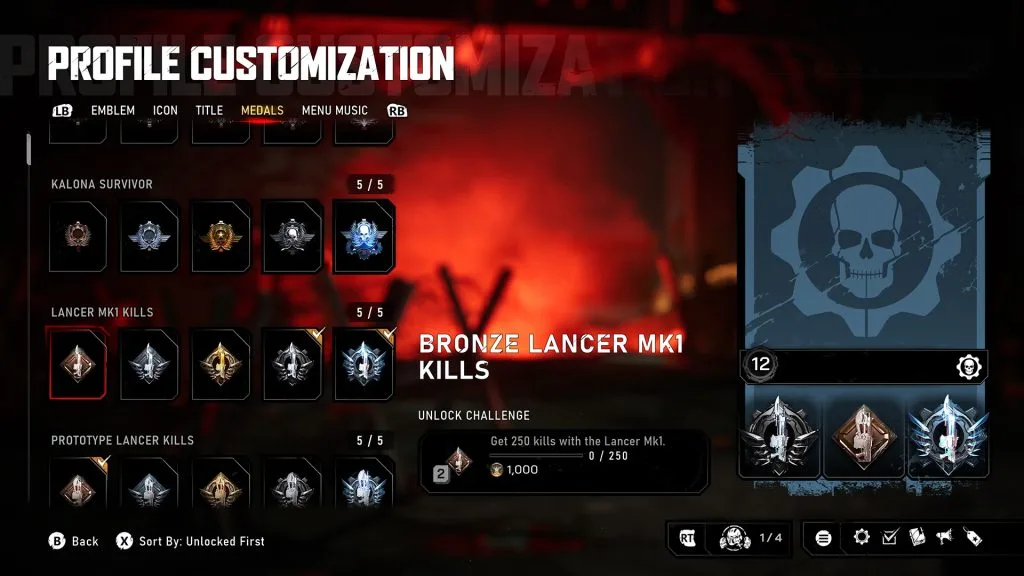
E-Day launched with more than 80 medal series. Each medal tracks mastery of a particular part of the game and progresses through Bronze, Silver, Gold, Onyx and Diamond tiers. Medal rewards can include Coins, banners and emblems. Completing the Diamond tier awards a Player Title, and up to three earned medals can be displayed on your Emblem.
Challenges create the recurring structure around those longer goals:
- Weekly challenges: There are 12 each week. Six must be completed in Horde Siege and six in Versus. They expire at the weekly reset and award Player XP.
- Seasonal challenges: Each season supplies 20 challenges across Horde Siege and Versus. Their rewards can include poses, weapon skin sets, banners, emblems, icons and base characters.
- Event challenges: A limited event adds five challenges connected to its themed rewards.
- Foundations challenges: These are permanent introductory objectives that teach multiplayer basics and mainly award base characters.
- Achievements: Every achievement unlocks a multiplayer Player Title. Some also grant another customization item, while campaign-section achievements unlock base characters.
Missing one week is not presented as a permanent progression failure. Weekly challenges are intended as a boost rather than a mandatory catch-up burden. Limited seasonal or event rewards also enter the Barracks after a cooldown period, where they can later be obtained with Coins or Iron.
Choose rewards separately from progression goals
Coins connect both multiplayer routes to selected cosmetic purchases in the Barracks. Iron is the optional premium currency, but buying a cosmetic is different from improving a Horde Siege class or a future Versus rank. Active challenge and achievement rewards still require their specified task rather than being replaced by an Iron purchase.
Use the current challenge list to decide what to play, then select the Barracks items you actually want. Premium Edition content, charity offers and certain partnership items are exceptions to the general earn-through-play approach. For an endgame plan, the useful distinction is between a task you must complete in a mode and an item you can acquire through the currency system. Currency caps and farming routes need their own checks; they do not determine whether PvE or PvP is the better starting point for you.
PvE endgame in Horde Siege
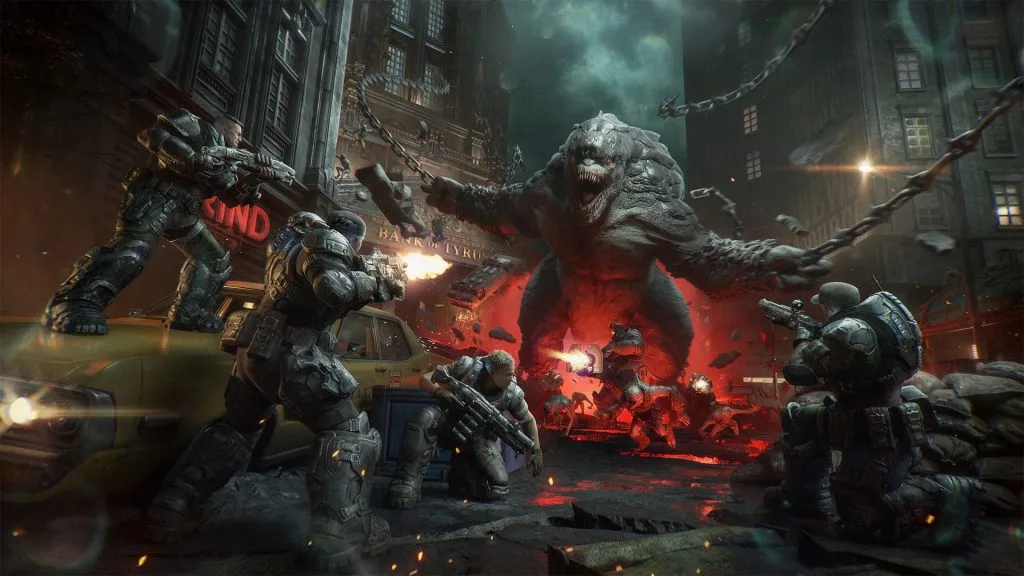
Horde Siege is the cooperative endgame route. Twelve players enter the same larger battlefield as three separate four-player squads. Each squad receives its own mission, but squads can cross paths, affect the state of the map and cooperate during major threats. A run ends with a final extraction attempt rather than simply stopping when its main objective is complete.
Mission lengths and repeatable variation
The three main playlists accommodate different session lengths:
- Blitz uses one or two objectives and usually lasts about 15 to 20 minutes.
- Siege uses multiple objectives across more of the map and generally lasts 20 to 40 minutes.
- Horde asks the squad to defend one position through ten waves and can last roughly 50 to 60 minutes.
Objectives include securing an occupied area, calibrating zones around a R.I.G., recovering parts to repair a R.I.G., defending an active R.I.G. and surviving Horde waves. Difficulty, mission modifiers, Poisons, secondary objectives and map-wide Invasion Events alter the conditions between runs. This makes Horde Siege the better fit when you want cooperative objectives and persistent build development instead of direct competition against another team.
Difficulty also scales with Class Level. Higher options offer increased rewards and expect more developed classes: Infantry is recommended for Class Levels 10–20, Commander for 20–30, and Allfather for max-level classes. The game suggests a difficulty based on your current class, although the squad makes the final selection.
PvE progression that persists
A completed mission awards Class XP to the class you used. Each launch class has 30 levels, unlocking loadout weapons, equipment, Armor Mods, Tactical Gear Mods and Weapon Mods along the track. Class milestones also provide base health and damage increases.
Class XP is distinct from Player XP. The former develops a particular Horde Siege class, while the latter advances the shared 100-level account track. Switching to Versus can continue Player Level progression but will not level a Horde Siege class.
Weapon Parts support persistent PvE mod purchases, while Energy is spent during the current mission. Successful extraction matters for retaining collected parts. Those resource rules affect a Horde Siege session, but they do not turn Versus into a class-leveling route or make an in-match resource equivalent to Barracks currency.
A full squad wipe consumes a Squad Life. If all Squad Lives are exhausted, the mission fails and returns the squad to the lobby with partial XP. That means an unsuccessful run is not always worth nothing, but successful extraction is the important condition when you need to preserve collected Weapon Parts.
PvP endgame in Versus
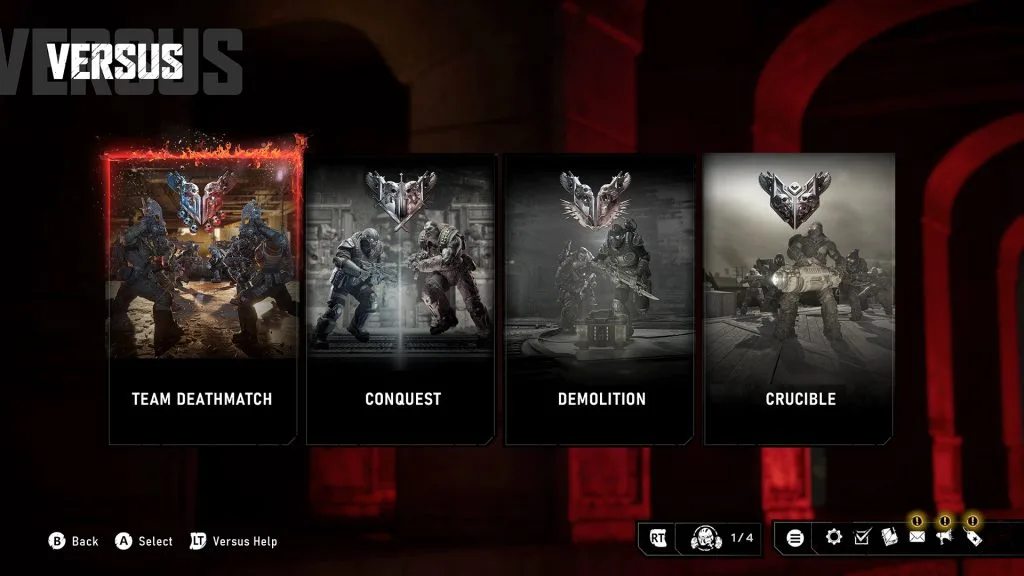
Versus is the competitive branch of the endgame. Every core mode is 4v4, players begin with the same loadout weapons and equipment, and Weapon Mods are disabled. Advantages are created during the match through teamwork, positioning, decisions and control of Power Weapons rather than through a persistent statistical loadout advantage.
The four core modes provide different competitive goals:
- Team Deathmatch revolves around eliminating the opposing team’s limited lives, with dynamic respawns reacting to where the fight moves.
- Conquest requires teams to occupy and defend an active zone until enough control time is accumulated to score.
- Demolition uses a neutral bomb that must be planted at one of two enemy sites. The attacking team then defends it without respawns, and three detonations win the match.
- Crucible centers on carrying a Power Core into a moving and shrinking scoring zone. The carrier can also use the Core’s electrical blast as a final defense.
Six Versus maps launched with the game, and rotating featured experiences supplement the core modes. Limited-time modes may accompany seasonal events or bring back modified versions of earlier Gears modes.
Social play before Ranked opens
Social playlists are the active PvP route on October 10. They include 4v4 Quickplay, Player vs Bot, limited-time modes and event playlists. Players vote on the next match, allowing a lobby to remain together. Player vs Bot playlists are divided by bot difficulty and provide a lower-pressure way to learn maps, mode rules and weapon positions.
Boot Camp offers a short introduction to controls and mechanics. Combat Training provides a multiplayer map where you can test weapons, adjust controls and spawn short Locust encounters. It also supports four-player co-op, making it useful for a squad that wants to prepare together without entering a live competitive match.
Ranked is scheduled for October 13. Once available, each mode-specific Ranked playlist will have its own progression. Placement matches assign a Skill Division and Rank. Skill Division represents the skill rating used for matchmaking and is relative to other players in that playlist, so it can move as the competitive population changes. Rank is based on Rank Rating and represents your ladder progress. Rank Rating is gained only after victories and lost only after defeats, with the amount tied to your Skill Division. Ranked also uses tighter matchmaking and stricter quitting penalties than Social play.
A practical post-campaign progression route
- Choose your immediate mode by goal. Enter Social Versus for direct 4v4 competition, or Horde Siege for cooperative objectives and class development.
- Check the current challenge list before committing to a session. Weekly challenges are divided evenly between Horde Siege and Versus, so a goal may require a specific route.
- Use Foundations objectives as orientation. They do not expire and are designed to teach multiplayer fundamentals while unlocking base characters.
- Advance the shared Player Level in either mode. Match play and weekly challenges contribute Player XP even when you are not pursuing a mode-specific ladder or class level.
- Track the separate progression system. In Horde Siege, watch Class XP and extraction-dependent Weapon Parts. In Versus, use Social play to learn the sandbox before Ranked opens.
- Spend Coins on chosen Barracks items instead of treating every cosmetic as a random drop. Match completion, Player Level milestones and medals all supply Coins under different cap rules.
- Review seasonal and event deadlines. Season 1 runs through December 1 and includes limited events. Active challenge rewards must be earned through their challenge, although expired limited rewards are intended to reach the Barracks after a cooldown.
Choosing the right E-Day endgame route
| Your preferred outcome | Best starting route | Reason |
|---|---|---|
| Competitive matches immediately | Social Versus | It is available now and uses the same fair-start 4v4 combat foundation as the competitive branch |
| Ranked ladder progression | Prepare in Social until October 13 | Ranked is scheduled but not yet open on the October 10 reference date |
| Persistent combat customization | Horde Siege | Class levels and Weapon Mods develop through the PvE progression track |
| Cooperative sessions of different lengths | Horde Siege | Blitz, Siege and Horde cover short, medium and longer mission formats |
| Broad weekly and seasonal completion | Alternate between both | Challenges intentionally assign objectives across Horde Siege and Versus |
| Account levels, medals and cosmetic collecting | Either mode, then both when required | Player Level, Coins and many rewards are shared, while some objectives remain mode-specific |
E-Day’s post-campaign structure therefore supports three valid approaches: remain primarily in cooperative PvE, concentrate on Versus, or alternate between them to complete the full challenge set. PvP becomes the dedicated competitive endgame when Ranked opens, but it is not the only route with persistent goals. Horde Siege carries its own class and equipment progression, while the account-level grind, medals, currencies and seasonal rewards connect both sides of multiplayer.