
Ryan Aston’s October 1 Slant review is favorable toward the E-Day campaign. He describes the familiar cover-shooting formula as carefully refined rather than reinvented, highlighting cooperative play, configurable equipment, positional enemy behavior, escalating encounters, environmental destruction, and a story about leaders abandoning civilians. He also considers the thematic treatment blunt. The article is a campaign-centered Xbox Series X assessment based on code provided by Assembly, not a technical audit or a test of every mode. No verified Slant rating number is included here; the favorable written verdict should not be converted into an assumed score.
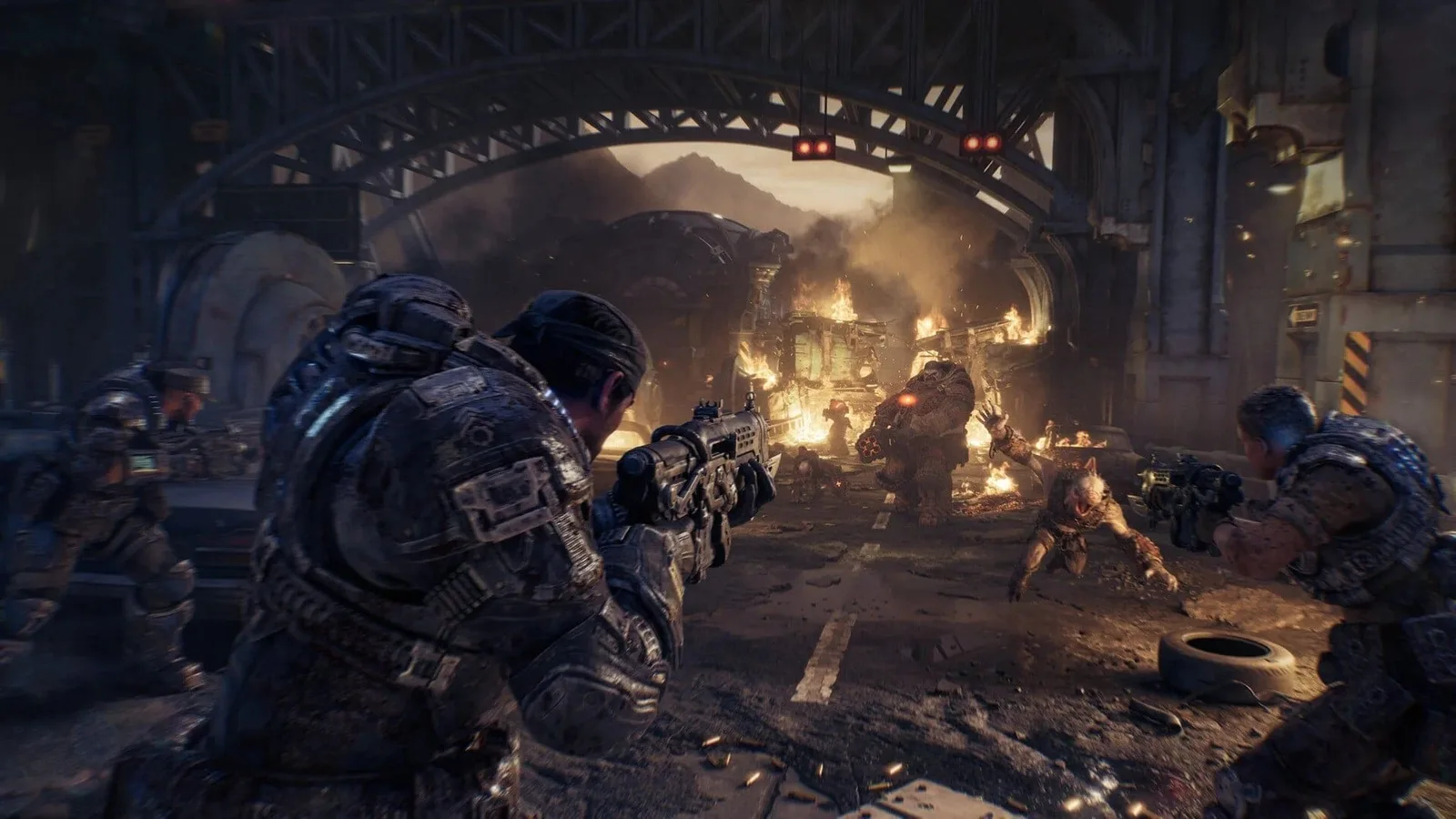
Squad combat under a bridge in Kalona.
Why the publication date changes the context
The review was published on October 1, 2026. That was the beginning of Premium Edition early access, five days before the October 6 general release. It was therefore an informed launch-period assessment, but it was also written before the broader release population had spent much time with the game.
The official launch schedule creates another important boundary. Versus Ranked was scheduled to open on October 13. At this guide’s October 10 reference date, that date was still ahead. A review published on October 1 cannot serve as evidence about the normal operation, population, balance, or long-term appeal of a competitive queue that had not yet opened.
This timing does not invalidate the campaign judgment. The campaign content available for review can still support criticism of combat, pacing, presentation, characters, and themes. It simply means the article should be read as a dated campaign assessment rather than a final audit of every launch feature.
It is also worth separating deliberate design from missing historical expectations. Official launch information describes E-Day as a newly built gameplay sandbox and acknowledges that some legacy franchise features were not included at launch. Consequently, “refined” should not be interpreted as “identical to every earlier Gears release” or “complete feature-for-feature parity.” Refinement can describe how the included campaign systems work without making a claim about the size of the total feature list.
How to translate the review into your own decision
The framework below is this guide’s interpretation, not an additional set of claims made by Slant. Use it to compare the review’s emphasis with the experience you actually want.
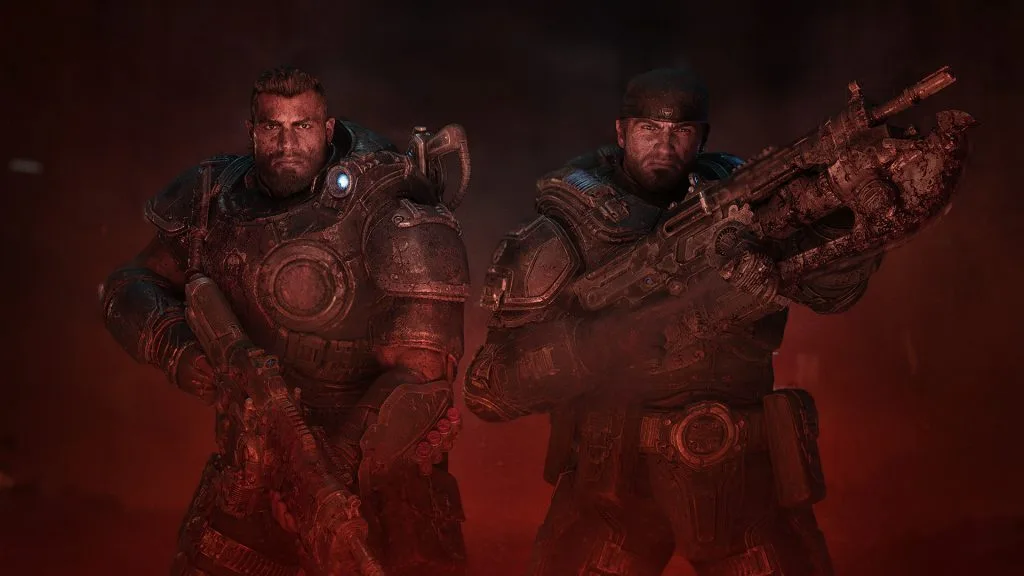
The campaign’s two leads prepare for combat.
| Your priority | What the campaign assessment can help you judge | What still needs separate evidence | Practical reading rule |
|---|---|---|---|
| Familiar Gears combat | Whether careful refinement sounds more valuable to you than radical reinvention | Exact input feel on your platform and preferred control method | Treat familiarity as a benefit only if you already want the cover-shooter foundation |
| Tactical pressure | Whether positioning, enemy response, and escalating encounters match your preferred combat rhythm | Difficulty-specific balance and performance under your exact settings | Look for design fit, not a guarantee that every encounter will feel equally demanding |
| Cooperative campaign play | Whether teamwork is part of the campaign’s appeal | Connection quality, friend-group scheduling, and account or subscription requirements | Separate the creative value of co-op from the logistics of accessing it |
| Story and atmosphere | Whether a prequel built around Kalona’s collapse and institutional failure interests you | Your tolerance for direct thematic delivery and any personal spoiler boundary | Use the thematic description to test interest without demanding plot details |
| Technical reliability | Very little beyond the reviewed presentation on one console configuration | PC frame rate, hardware-specific faults, networking, patches, and accessibility needs | Consult platform-specific testing before making a technical purchase decision |
| Competitive longevity | Almost nothing conclusive | Ranked population, matchmaking, balance updates, and post-launch retention | Wait for evidence collected after the relevant mode is live |
The most important row is the one closest to your reason for buying. Someone seeking a focused campaign can give the campaign criticism substantial weight. Someone choosing primarily for competitive play should give it much less weight, because enthusiasm about story missions cannot answer a multiplayer-first question.
You should also distinguish preference evidence from quality evidence. A well-executed version of a familiar formula may still be the wrong purchase for someone who wants a radical mechanical departure. Conversely, the absence of a sweeping reinvention is not automatically a weakness for a player who wants recognizable cover combat with modernized encounters. The review can describe the direction; only your own priority determines whether that direction is desirable.
Refinement versus reinvention
“Refined rather than reinvented” is the central decision tension. Read it as a description of design ambition, not as a shortcut for either praise or criticism.
Refinement is likely to matter positively when you want recognizable combat rules, readable squad roles, and encounters that develop through pressure and positioning. In that case, novelty can come from how familiar pieces are arranged rather than from replacing the basic play structure. Enemy placement, environmental disruption, resource choices, and the rhythm of moving between cover can change an encounter even when the broad genre remains recognizable.
Reinvention matters more when your purchase depends on a fundamentally new combat model. If the main reason you are considering E-Day is the hope that it abandons the established cover-shooter identity, a favorable description of careful iteration should lower that expectation. Positive execution and radical novelty are separate qualities.
Use three checks before turning this distinction into a buying conclusion:
- Decide whether the established cover-combat foundation is something you actively enjoy or merely tolerate.
- Ask whether stronger encounter construction would be enough to refresh that foundation for you.
- Separate campaign design changes from expectations about legacy modes or features outside the campaign.
If the answer to the first two checks is yes, the described direction is probably aligned with your preferences. If either answer is no, the positive tone may be less relevant to you than it is to a returning campaign player.
Cooperative appeal and solo expectations
E-Day’s campaign supports solo play and four-player online co-op. That verified feature boundary is useful when translating discussion of teamwork into a real play plan. It means cooperative appeal does not make co-op mandatory, but it may affect how much of the described tactical value you expect to experience through coordination with other people.
For a co-op group, judge the purchase on two separate levels. First, consider the creative question: do shared positioning, equipment decisions, and coordinated reactions sound like the kind of campaign interaction your group enjoys? Second, consider the access question: can the intended players use compatible platforms, accounts, online services, and schedules? A review can inform the first question without resolving the second.
For a solo player, do not assume that praise directed at cooperation automatically proves an inferior solo experience. It only tells you that teamwork is one valued part of the design. A proper solo decision would require evidence about companion behavior, difficulty tuning, checkpoint reliability, and how tactical choices work without human communication. Those details should not be invented when they are outside the reviewed evidence summarized here.
Local play has an additional boundary. Two-player local split-screen is available on console, while the PC version has no native local split-screen. That fact may determine the correct platform for a household planning to share one display, but it does not change the campaign’s critical assessment. Treat it as an access filter applied after deciding whether the campaign itself interests you.
Reading the story discussion without spoiling the campaign
E-Day is a prequel set fourteen years before the original Gears, with Marcus and Dom in Kalona during the initial emergence. That premise gives the campaign a known historical direction, but it does not require a detailed plot summary to evaluate the review’s thematic angle.
This guide’s interpretation is that the safest decision criterion is tone. Ask whether you want a disaster narrative that contrasts people trying to protect one another with damaging decisions made by distant authority. If that conflict sounds compelling, the thematic focus is relevant. If you prefer political material to remain understated, the warning that the delivery can be direct is equally relevant.
Avoid converting a thematic observation into a plot forecast. It does not identify which characters survive, how individual set pieces resolve, or whether every story beat carries the same emphasis. It also does not prove that every player will respond emotionally in the same way. Critical interpretation describes how one writer understood the material; it is not an objective measurement of emotional impact.
A spoiler-light reading should therefore stop at four supported ideas: the pre-attack view of Kalona matters to the contrast, destruction gains meaning from that context, sympathetic squad members are set against failures above them, and the political theme is delivered plainly. More detail is unnecessary for deciding whether the narrative approach sounds suitable.
Evidence to check before deciding
The decision table identifies what the review can contribute. For the remaining conditions, match the evidence to the question:
- Performance: Use current tests for your platform, hardware and intended display mode. Visual praise does not establish a frame-rate target or stability on your system.
- Accessibility: Check the exact vision, hearing, motor, cognitive or motion-related options you need before assuming the campaign will fit.
- Online play: Use current service information and post-launch testing for connectivity, matchmaking, population, progression and balance. The campaign review predates Ranked’s scheduled opening.
- Feature expectations: Check the launch feature list directly. Refinement does not imply that every legacy mode or mechanic returns.
If one of these is your primary reason for buying, resolve it before assigning much weight to a favorable campaign verdict. These checks concern your own decision; they do not add claims to Aston’s review.
Apply the verdict to your priorities
Before deciding, name the one condition that matters most. A focused campaign, an evening with friends, a technical showcase and a competitive ladder are different goals. Choose the relevant row in the decision table, apply the platform and play-group filters, and check any remaining blocker with evidence that actually tests it.
Give the campaign assessment more weight when you already enjoy the Gears cover-combat foundation and want a dramatic prequel. Give it less weight when your decision depends on radical mechanical change, Windows performance, a required accessibility option or sustained competitive play. That difference reflects the question you are asking, rather than a hidden change to the review’s verdict.
Keep the qualitative judgment and your personal requirement separate. A favorable assessment can justify interest in the campaign while still leaving a practical purchase condition unresolved. You do not need an invented rating, detailed story spoilers or a promise about untested modes to make that distinction.