The Gears of War E-Day controversy is not one dispute with one proven cause. It combines documented gameplay changes, legacy features missing at launch, disagreement over the new Horde Siege format, and a separate culture-war backlash involving Mags Carter, Pride-themed cosmetics, and the credited consulting company Hit Detection. Those subjects are often bundled together even though the evidence behind them is very different.
The strongest claims are the ones confirmed by The Coalition: E-Day deliberately slows chained cover cancels, carries momentum between actions, omits several familiar features at launch, and makes Horde Siege its current flagship PvE format. The weakest claim is that a coordinated campaign definitively caused the game’s early negative Steam reviews. A launch report found ideological complaints among the reviews, but it also found objections to gameplay direction and missing features. That mixture does not establish a single cause or prove organized review bombing.
The documented controversy at a glance
The useful way to read the debate is to separate confirmed design decisions from interpretations circulating around them.
| Disputed subject | What is documented | What remains unproven or unsettled |
|---|---|---|
| Cover movement | The July 31 breakdown described cancellation within 1.5 meters; the September 30 launch update subsequently adjusted cancel distance and cover-entry speed. Slower chains and momentum remain the documented design direction | Claims that the system is merely broken, or that classic hyper-bouncing has already been restored |
| Legacy features | Meat Shields, Chainsaw Duels, selected older weapons, Private Lobbies, and leaderboards were not included for launch | Which features will return, when they might return, and whether they will arrive in E-Day or a later game |
| Horde | Horde Siege is a 12-player mode built around three squads, missions, objectives, progression, and extraction; one playlist uses 10 defensive waves | A traditional 50-wave mode is not confirmed in the current launch material, but that does not prove it can never be added |
| Gnasher behavior | E-Day uses a hybrid camera-and-muzzle check for hipfire, while aimed shots still originate from the camera position; launch tuning improved hipfire consistency and increased aimed damage at range | Broad claims that every disputed shot is caused by one mechanic rather than latency, aim, range, or another match condition |
| Cosmetics and identity | Launch reporting documented objections to Mags Carter, Pride-themed cosmetics, and Hit Detection’s credit | The scale of that faction, its effect on sales, and its share of negative reviews cannot be established from selected posts or reviews |
| Steam reception | An October 6 report described a Mostly Positive rating, with 73% of more than 2,900 user reviews recommending the game at that time | That snapshot is not permanent and does not show why every reviewer voted positively or negatively |
This distinction matters because criticism of a confirmed mechanical choice can be evaluated directly. A claim about the hidden motives of developers, consultants, reviewers, or an entire player community requires evidence that the available public reporting does not provide.
Movement changed by design, not by accident
The most substantial gameplay controversy concerns movement. The Coalition described E-Day as a new game built from scratch rather than a continuation of the exact movement sandbox used by recent entries. Its stated target is smoother, more fluid movement that still preserves the weight of an armored Gear. That foundation adds sprint transitions, sliding, jumping, direct mantling, climbing, low cover, and traversal through cover gaps.
At the same time, E-Day places firmer limits on the rapid cover-cancel behavior associated with high-level play in earlier games. The July 31 breakdown originally described cover-entry cancellation within 1.5 meters of the destination. That earlier rule was intended to commit the character farther along the approach, make movement more predictable, and slow repeated cancels. The September 30 launch update then adjusted cover-entry speed and cancel distance, so 1.5 meters should not be treated as a verified October threshold. The earlier breakdown described its design direction as “no more hyper-bouncing”; the launch tuning did not announce a return to the old movement sandbox.
Momentum is another intentional constraint. Actions transfer motion consistently, so a player cannot stop and reverse direction instantaneously. A cancel can still reduce speed quickly, but changing direction takes time. The design goal is readability: opponents should have a better chance to understand where a player is moving, where a weapon is pointing, and when a committed action leaves an opening for a counter.
This does not mean E-Day simply removes mobility. Entering cover remains one of its fastest actions, while sprinting, evading, and sliding provide alternative ways to maintain speed. The controversy is therefore about the kind of skill the system rewards. Legacy specialists may value rapid cancel chains and abrupt directional changes; E-Day instead emphasizes commitment, momentum, route choice, and readable counterplay.
The official launch update shows that the design was adjusted after the multiplayer beta without reversing its basic direction. The Coalition improved strafe responsiveness, changed cover-entry speed and cancel distance, reduced Cover Slip speed, and shortened slide distance. Those changes demonstrate active tuning, but they do not support the claim that classic movement was restored unchanged. The underlying commitment-and-momentum model remained part of the stated design.
Missing legacy features at launch
Another documented source of backlash is the absence of familiar features. The Coalition acknowledged that rebuilding one unified sandbox for Campaign, PvE, and PvP created a tradeoff: it could not include every legacy feature at launch.
The named omissions include:
- Meat Shields.
- Chainsaw Duels.
- Selected weapons from earlier games.
- Private Lobbies.
- Leaderboards.
These are not rumors inferred from a menu. They were identified directly in the official pre-launch response. They also cover different kinds of loss. Meat Shields and Chainsaw Duels affect the series’ combat identity, selected weapons affect sandbox variety, and Private Lobbies or leaderboards affect how communities organize and compare multiplayer play.
The official wording is cautious. It says these features are not gone from the franchise and that the team is considering what to deliver or improve either after launch or in its next title. That is not a dated roadmap, and it is not a promise that every named feature will be patched into E-Day. Until a feature receives a specific announcement, the accurate status is “absent at launch, with its future undecided publicly.”
That boundary prevents two opposite exaggerations. It is inaccurate to say the features were secretly removed when the developer disclosed their absence and its reason. It is equally inaccurate to assure players that all of them are definitely returning in a particular season.
The Horde Siege debate
Horde Siege is officially presented as an evolution of Gears’ wave-based PvE rather than a recreation of the traditional 50-wave structure. It supports 12 players divided among three squads on large Kalona maps. Each squad enters an ongoing battle with its own mission, crosses paths with other squads, completes changing objectives, and eventually attempts to extract.
Its launch structure includes four classes—Assault, Breacher, Marksman, and Medic—along with persistent class progression, Armor Mods, Tactical Gear Mods, and Weapon Mods. Missions can involve securing, calibrating, repairing, or defending R.I.G. equipment. Invasion events can introduce major enemies and temporarily affect every squad on the map.
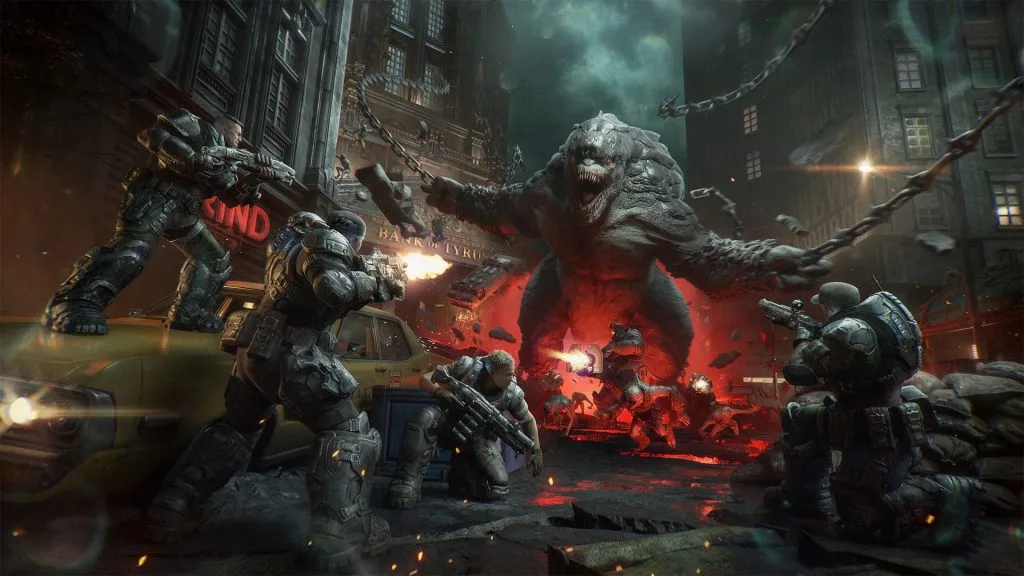
A large-scale Horde Siege encounter on the Kalona battlefield.
There is a Horde playlist inside Horde Siege, but the documented version asks a squad to defend one position through 10 waves. It is expected to last up to 50–60 minutes. That is not the same as confirmation of the older 50-wave mode.
The controversy is therefore grounded in a real format change. Players looking for long, predictable wave progression may not consider dynamic missions and extraction an equivalent replacement. Other players may prefer shorter playlists, larger battlefields, class roles, and objectives that change between runs. Both reactions concern an actual design choice.
What the current evidence does not support is a permanent declaration that classic 50-wave Horde has been abandoned forever. The launch material promises additional Horde Siege classes, maps, missions, modifiers, and seasonal content, but it neither confirms a traditional mode nor rules one out for all future updates. The precise conclusion is narrower: Horde Siege is the supported launch format, and a traditional 50-wave mode is not currently confirmed.
Gnasher complaints and the official explanation
The Gnasher debate overlaps with movement because close-range fights depend on camera position, character position, and the commitment created by entering or leaving cover. The Coalition’s explanation distinguishes aimed fire from hipfire.
When aiming down sights, E-Day continues the series practice of firing from the camera position. For hipfire, it introduces a hybrid check that evaluates both a camera-oriented shot and a shot from the weapon’s muzzle, then applies the result intended to match the visible target interaction more closely. The stated goal is to reduce cases where a shot appears as though it should connect but misses because of the difference between camera and muzzle alignment.
After beta feedback, the launch tuning increased Gnasher damage while aiming at range and improved hipfire consistency. The update also fixed a separate case that allowed players to hit enemies outside the direction their barrel faced while aiming.
These details show that the developer acknowledged concerns and changed the weapon before launch. They do not prove that every player complaint was mistaken, nor do isolated clips prove the entire hybrid system is defective. A single encounter may also involve range, pellet placement, movement, networking, or the timing of the shot. The controversy page can establish the documented mechanic and response; it cannot diagnose an individual match from a generalized complaint.
Cosmetics, currencies, and political backlash
A separate controversy formed around Mags Carter, Pride-themed multiplayer cosmetics, and the appearance of Hit Detection in the credits. Launch reporting found negative reviewers and social-media users objecting to those elements. It also reported that some players believed Mags received too much attention relative to Marcus Fenix and Dom Santiago.
Those objections are evidence that a culture-war backlash existed. They are not evidence that every negative reviewer shared the same motive, that a consulting company controlled the game’s creative direction, or that criticism of unrelated mechanics was insincere. The reporting itself noted that negative reviews covered several subjects, including missing private matches, missing Meat Shields, and creative direction.
Launch reporting also records a public counterargument attributed to original Gears creator Cliff Bleszinski: political and social themes were already part of the franchise’s earlier lore. That response disputes the idea that political themes entered Gears only with E-Day. It does not settle whether every player likes the new character or cosmetics, and it does not prove what role any consultant had in individual creative decisions.
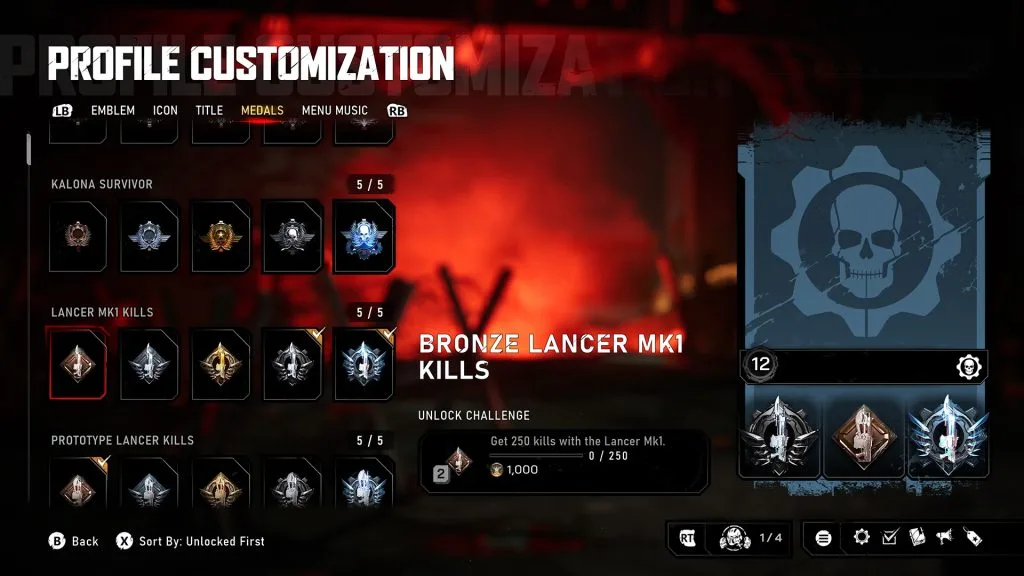
The profile and progression interface behind the customization debate.
The official customization plan provides firmer evidence about how cosmetics are acquired. E-Day launched with more than 60 character skins, and nearly every customization item can be earned through play. Direct rewards come from challenges, achievements, and medals. Other items can be selected in the Barracks using Coins earned through multiplayer performance, player-level milestones, and medals.
There are three disclosed categories of pay-only items: Premium Edition content, charity offers, and partnership items. Iron is the optional premium currency used to acquire individual Barracks items or weekly shop offers more quickly. Weekly offers use Iron because they are discounted, but the shop is not described as a source of exclusive rotating items; featured contents remain individually available in the Barracks. Bundle prices also decrease when the player already owns part of the set.
That structure does not make every criticism of monetization invalid. Match-earned Coins have a weekly cap, even though Coins from medals and player levels do not. Some partnership and edition cosmetics require payment or an outside promotion. The accurate description is a mixed system with earnable cosmetics, optional premium acceleration, and limited pay-only categories—not either “everything is free” or “everything desirable is locked behind the shop.”
What the early Steam reaction can and cannot prove
An October 6 launch report described E-Day’s Steam user rating as Mostly Positive, with 73% of more than 2,900 reviews recommending it at that moment. The same report highlighted negative reviews about identity-related content, the credited consultant, creative direction, and missing legacy features.
That snapshot supports three limited conclusions:
- A visible negative reaction existed during launch.
- The reaction contained both ideological and gameplay-related complaints.
- Overall recommendations remained positive in the reported snapshot.
It does not measure how many reviews belonged to each complaint category. It does not demonstrate coordination between reviewers. It also cannot be treated as the current score indefinitely, because Steam aggregates change as more owners post reviews. Calling the event “review bombing” may describe how the pattern looked to a publication, but it should not be converted into a proven account of organization, motive, or commercial impact without additional data.
The official response and its limits
The Coalition’s clearest response arrived through its gameplay breakdown and September 30 launch update. Together, those posts explained the intended movement model, acknowledged hot community topics, described post-beta tuning, clarified how Gnasher aiming works, and openly listed several legacy features that were not ready for launch.
That response is meaningful because it converts some arguments from speculation into testable design facts. Cover-cancel commitment is intentional. Momentum is intentional. The hybrid Gnasher check is intentional. Missing legacy features reflect the scope of rebuilding the sandbox, according to the developer. Beta feedback led to concrete tuning changes.
The response is not a complete answer to every controversy. It does not provide a return schedule for Private Lobbies, leaderboards, Meat Shields, or Chainsaw Duels. It does not confirm traditional 50-wave Horde. It does not quantify the effect of identity-focused backlash or establish the creative influence of an outside consultant. It also cannot decide whether an intentional design change feels better to every veteran player.
The defensible bottom line is that E-Day made deliberate departures from recent and classic Gears systems, disclosed several launch omissions, and adjusted parts of the sandbox after beta feedback. Those choices provide legitimate grounds for disagreement. Claims about secret motives, a single cause for negative reviews, guaranteed feature returns, or permanent abandonment go beyond what the documented evidence currently shows.